Internal communication has become one of the most attractive attack surfaces for sophisticated cybercriminals. With AI-driven phishing, credential theft, and social engineering now targeting employees across all departments, not just IT, organizations can no longer treat communication security as a secondary concern.
Misrouted emails, unauthorized access, compromised credentials, and insecure channels create risks that directly impact operational continuity, regulatory compliance, and even brand trust. As employees collaborate across devices, networks, and locations, secure internal communication has become a core component of modern cyber resilience.
This guide outlines the key risks and best practices organizations should follow to safeguard internal communication and build a culture of secure, compliant collaboration.
Why Internal Communication Is a Growing Risk?
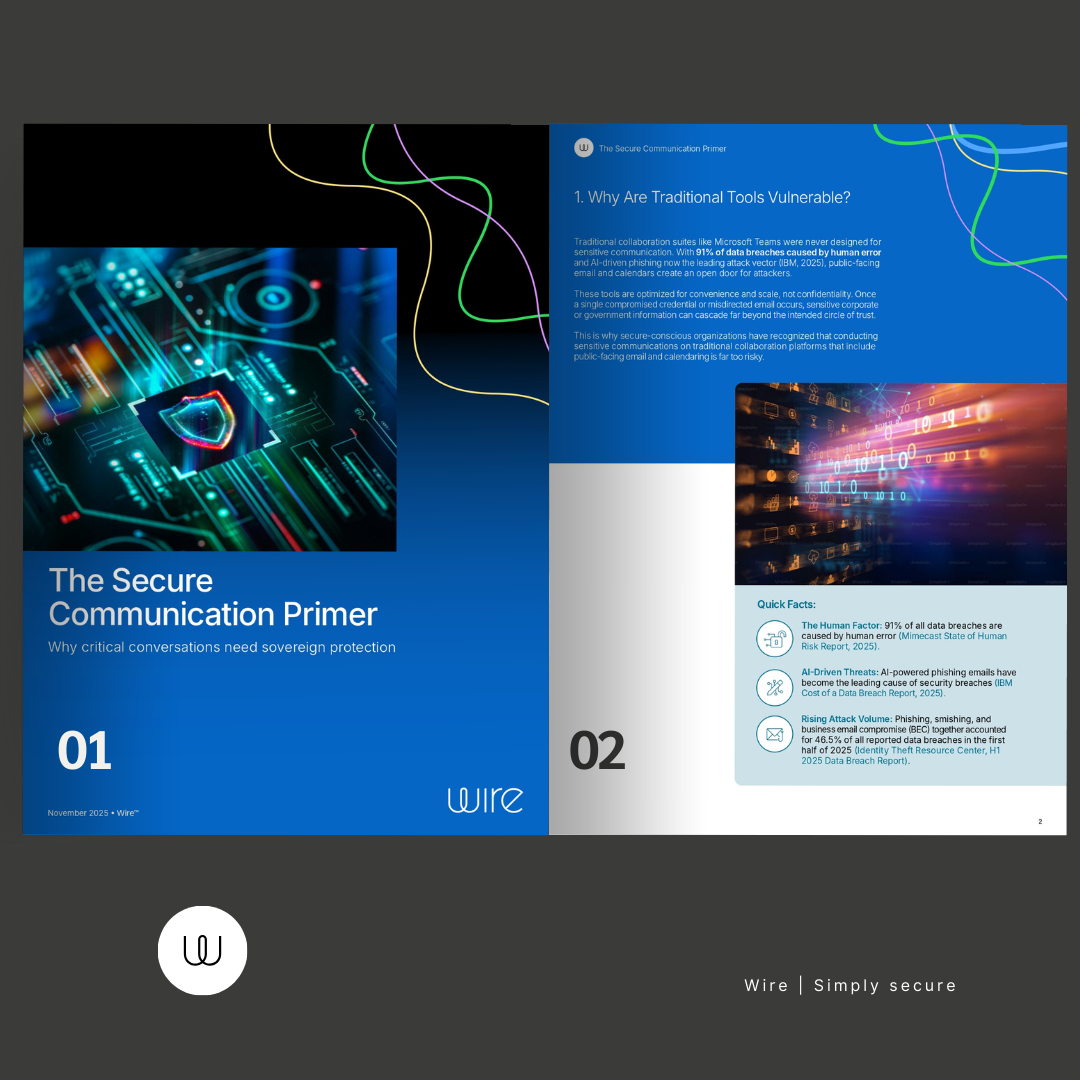
Most businesses still rely on channels that were never designed to handle sensitive information. Email, basic messaging tools, and legacy collaboration suites expose organizations to unintended data leakage, interception, lateral movement by attackers, and compliance violations. Email remains the most exploited entry point for attackers while AI-powered phishing emails are now the leading breach method. 95 % of all data breaches are caused by human error. 79% of security leaders agree that the use of collaboration tools poses new threats. These lapses result in data loss, as well as regulatory penalties, reputational damage, business disruption, and loss of stakeholder trust.
Common internal communication risks include:
- Account compromise through phishing or password reuse
- Unauthorized access when tools lack role-based controls
- Shadow IT, where employees use consumer apps for convenience
- Accidental data sharing, misdirected messages, or wrong recipients
- Insider threats, both intentional and unintentional
- Regulatory exposure under GDPR, NIS2, DORA, and sector-specific rules
- Metadata leakage, revealing communication patterns or sensitive relationships
As internal communication grows in volume and complexity, organizations must shift from ad hoc practices to a structured, zero-trust approach.
The 7 Best Practices for Secure Internal Communication
1. Use End-to-End Encrypted Platforms
Partial encryption is not enough in the face of mounting risks. A fully secure communication platform ensures end-to-end encryption. Messages are encrypted at the source, and decrypted only by the intended recipient using a unique decryption key. This should apply to all discussions, calls and files by default, and communication must be protected in transit and at rest. Messaging Layer Security represents the next stage in the evolution of end-to-end encryption, extending strong cryptographic protection to large-scale group messaging so that conversations remain fully secure regardless of the number of participants.
2. Implement Strong Authentication and Access Controls
The platform must also operate on zero-trust principles where no user, no credential, and no device is automatically trusted. It must carry out continuous verification of users to ensure there is no unauthorized access. This includes enabling single sign-on (SSO), applying multi-factor authentication (MFA), and implementing robust access-control policies to maintain a strong security posture.
3. Segment and Govern Communication Channels
Establish separate channels for internal communication and external coordination with vendors and partners. This will keep confidential discussions and documents within secure environments and prevent accidental sharing or unauthorized access. It’s equally important to make the presence of external participants unmistakably visible. Features like Wire’s prominent “Guests are Present” banner help employees instantly recognize when non-internal users are part of a conversation; an extra layer of awareness that many platforms still lack and that security-conscious organizations value highly.
4. Train Employees on Security Awareness
Human error remains the biggest internal cybersecurity risk which is why employees must serve as the first line of defence. Conduct ongoing training and awareness programs on phishing attempts, sharing etiquette, and the importance of using secure communication channels. Invest in secure by design platforms with intuitive, user-friendly interfaces and train teams to use them.
5. Establish Clear Policies for Data Sharing and Storage
Create clear policies that define what can and cannot be shared, with whom and through which channels it can be shared. Include audit logging, data retention, and compliance documentation.
6. Use Secure File Sharing and Collaboration Tools
Invest in communication platforms that ensure enterprise-grade security. End-to end-encryption across calls, documents, messages, and conference calls is non-negotiable. And it must also enforce role-based zero-trust access, SSO, and multi-factor authentication to ensure that all data remains protected throughout its lifecycle.
7. Regularly Review and Update Communication Policies
Securing communication channels cannot be a one-time activity. Continuous improvement, patching, and compliance updates are crucial for staying ahead of evolving threats and regulatory requirements.
Common Mistakes That Undermine Secure Communication
Even organizations with advanced cybersecurity programs often fall into these traps:
- Using consumer apps for business chats
Consumer apps, like WhatsApp or Signal, are easy to use and popular. But they often lack enterprise-grade security controls and have weak or no access control measures in place. They also don’t keep auditable records required for regulatory compliance. Mandate the use of end-to-end encrypted, fully secure, compliant, enterprise-grade communication and collaboration platforms.
- Sharing credentials
Shared credentials or access codes increase the risk of unauthorized access and credential misuse. Enforce strong password policies and multifactor authentication, and educate employees on the importance of these policies
- Ignoring device security
Unsecured devices can be easily exploited by hackers. Any device that holds, is connected to, or can access sensitive enterprise data must be protected via device encryption, endpoint management strategies, timely patches and security updates, and remote wipe abilities.
- Not updating tools or patching vulnerabilities
Outdated software is a prime target for attackers. Automate updates and conduct periodic security reviews to ensure all software is up to date.
Conclusion
Secure internal communication can no longer be treated just as a compliance checkbox. It is a strategic differentiator and advantage that builds trust, resilience and operational excellence. As the threat landscape continues to evolve and escalate, you must choose partners who approach privacy as a design principle instead of an ad-hoc bolted-on measure. This approach helps safeguard data, protect reputation, and enable long-term success in the future of digital collaboration.
Learn more about modern encryption standards and secure collaboration, download Wire’s Secure Communication Primer now.