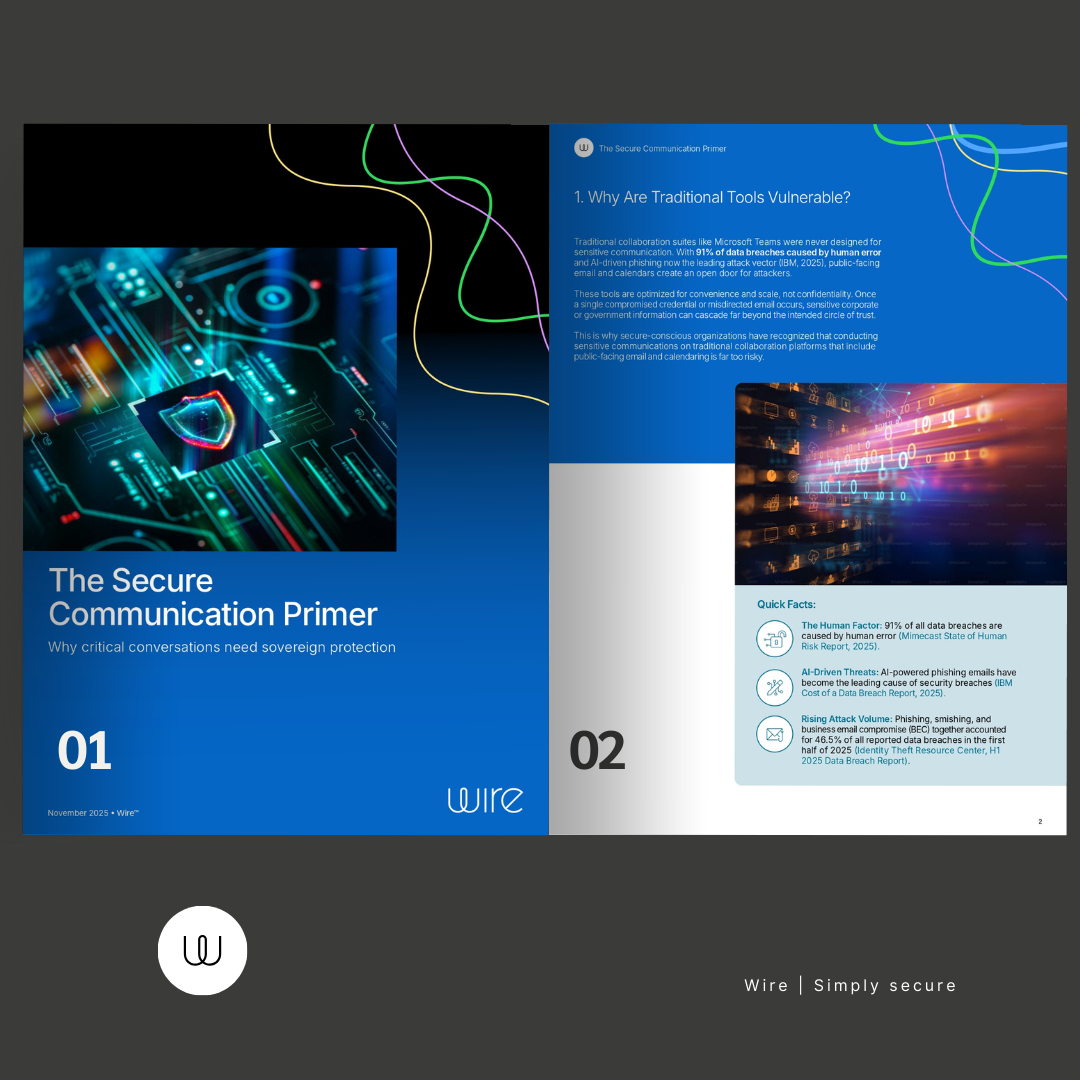
For years, secure communication was treated as a technical feature, something that the IT teams would take care of, and measured mostly by compliance checklists. But the way organizations operate today has changed dramatically. Communication isn’t just how people exchange information; it’s the backbone of decision-making, crisis response, and day-to-day operations.
And because of that, communication has become one of the most vulnerable parts of the enterprise.
Below is the story of why secure communication has shifted from a “nice-to-have” to critical infrastructure for organizations of all sizes.
The Problem: Traditional collaboration tools were never designed for sensitive information
Signal, WhatsApp, and Telegram are familiar to millions of users. They are intuitive, work across all devices, and offer security functions such as end-to-end encryption. These apps were built for convenience and reach, not confidentiality, sovereignty, or resilience. They lack controls for governance, access management, and large-team coordination, making them fundamentally unsuitable for regulated or mission-critical environments.
As a result, sensitive discussions, operational updates, and confidential files regularly travel through channels where:
Communication tools that once felt “good enough” are now actively contributing to an organization’s risk surface.
The Risk: Communication has become an attack surface
Cyberattacks no longer target only infrastructure, they target people and the channels they use. Attackers exploit email first. They infiltrate messaging apps. They disrupt communication systems during a breach specifically to slow down response efforts.
At the same time, compliance requirements have tightened. Regulations like GDPR and NIS2 set strict expectations for how organizations communicate during incidents, how information is shared internally, and how communication records are maintained.
In short:
- If communication channels are insecure, everything built on top of them becomes fragile.
- If communication fails during a crisis, the organization loses control.
This is why secure communication is increasingly framed not as cybersecurity, but as operational resilience.
The Shift: Security no longer slows teams down
The misconception that secure communication is complicated or disruptive is outdated. Modern secure collaboration platforms offer encryption by design, intuitive user experience, and support for large, dynamic teams.
New standards like Messaging Layer Security (MLS) make it possible to secure large, fast-moving group conversations without sacrificing performance or scalability. Organizations can collaborate confidently, whether across departments, remote teams, or external partners without compromising governance, traceability, or compliance.
The Strategic Imperative: Why secure communication is more important than ever
Once organizations start examining where risk lives, the picture becomes clear: communication is at the center of almost every process that matters.
Secure communication now underpins:
- Protecting Sensitive Information: From confidential board updates to operational plans, organizations handle information that must remain private. Secure channels ensure only the intended recipients can access it.
- Preventing Breaches and Responding Faster: When attackers compromise communication, they gain both access and confusion. Secure, out-of-band channels restore control and support coordinated, rapid decision-making.
- Meeting Legal and Regulatory Expectations: NIS2, GDPR, and sector-specific rules increasingly require organizations to demonstrate secure communication, traceability, controlled access, and strong authentication.
- Building and Preserving Trust: Employees, customers, partners, and regulators judge organizations by how responsibly they handle information. Secure communication signals maturity, sovereignty, and reliability.
- Ensuring Business Continuity: Organizations cannot afford downtime in a crisis. Secure platforms enable uninterrupted collaboration, even when primary systems fail.
Secure communication is not just about keeping messages private, but about keeping the organization functional, compliant, and trusted.
The Conclusion
When the tools we rely on for daily conversation also support crisis coordination, regulatory compliance, and strategic decision-making, they can no longer be an afterthought.
Secure communication is a foundational pillar of modern operations. It protects people, processes, and the continuity of the organization itself.
Choosing the right platform is a strategic decision that shapes resilience, trust, and long-term sustainability.