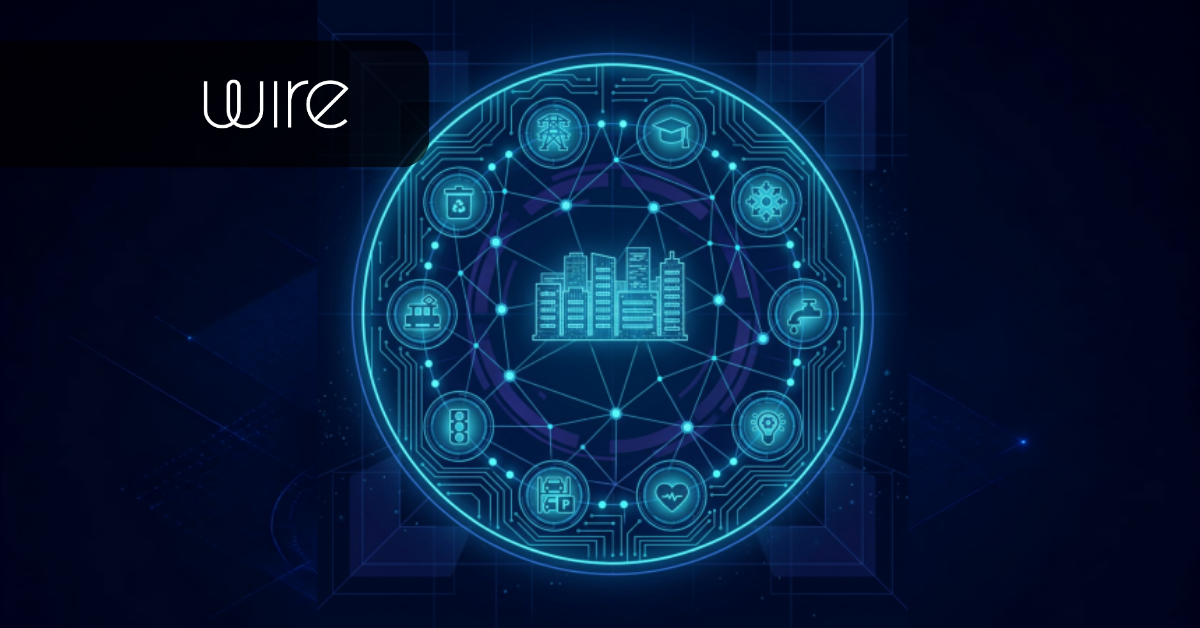
Critical national infrastructure covers power grids, water systems, healthcare, financial networks, communications, transport, and other infrastructure where disruption can have serious consequences for the nation.
Protecting these systems means knowing what infrastructure is critical, how different sectors depend on each other, and which threats could interrupt essential services. It also means having a plan for keeping operations running when an attack, outage, or supplier failure affects systems that teams normally rely on.
This guide covers what critical national infrastructure means, the sectors that make up CNI in the UK and the US, the threats they face, and the measures organizations use to protect them. We also look at an important part of operational resilience: how teams can continue coordinating a response when their usual communication systems are unavailable or compromised.
To see how Wire keeps CNI teams connected during a crisis, book a demo with our team.
Key takeaways
- Critical national infrastructure (CNI) refers to the assets, systems, and services a country depends on for security, public safety, and economic stability.
- The UK's National Protective Security Authority (NPSA) recognizes 13 CNI sectors, while the US Cybersecurity and Infrastructure Security Agency (CISA) recognizes 16 under Presidential Policy Directive 21.
- CNI operators face cyber threats, physical threats, nation-state activity, natural disasters, insider risk, and a growing supply chain problem tied to shared IT and managed services.
- Protecting CNI requires layered controls across risk assessment, physical security, OT and network security, cyber defense, and incident response planning.
- Communication is rarely treated as its own resilience requirement, even though incident response depends on trusted coordination between security teams, executives, suppliers, and government bodies. Wire gives CNI operators secure, sovereign communication tools that keep working even during a crisis.
What Is Critical National Infrastructure?
Critical National Infrastructure (CNI) is the set of assets, systems, and networks a country depends on to function. It spans across energy, water, transport, communications, healthcare, finance, defense, and government services. The UK's National Protective Security Authority (NPSA) defines CNI as those elements of national infrastructure whose loss or compromise could cause major harm to essential services, significant loss of life, or serious damage to national security and the economy.
CNI includes both physical and digital assets. For example, a power substation, a water treatment plant, and a hospital building are physical infrastructure. The industrial control systems that run them, the networks that connect them, and the software that monitors them are digital infrastructure, and modern CNI depends on both working together.
In the UK, the NPSA also emphasizes the connected nature of essential services where a failure in one area can affect other sectors that depend on it, increasing the possibility of cascading consequences.
The UK generally uses the term ‘critical national infrastructure’, while the US government commonly uses ‘critical infrastructure’. Individual governments also classify sectors differently, so CNI should always be understood within the relevant national and regulatory context.
Why Critical National Infrastructure Matters
Critical national infrastructure matters because it includes foundational physical and digital systems a country depends on, like electricity generation, drinking water, mobile networks, hospitals, payment systems, and transport services.
- Public safety and health depend on power, water, and emergency services staying operational around the clock.
- Economic stability depends on financial systems, transport networks, and energy supply continuing to function without prolonged interruption.
- National security depends on defense, government, and communications infrastructure remaining under trusted control.
- Government operations depend on the systems that deliver public services and coordinate emergency response.
Due to the connected nature of different sectors of CNI, disruption in any one of these essential categories can have cascading effects across a country. For example, a major electricity outage could affect telecommunications infrastructure, transport systems, healthcare facilities and emergency services at the same time. The affected organizations then have their own dependencies, which can amplify the original disruption.
That interdependency is why CNI protection has to cover resilience and recovery alongside prevention. CNI security teams can’t assume that every attack will be stopped. So they should plan for what happens when systems become unavailable or untrusted.
What Threats Face Critical National Infrastructure
CNI operators face a wide range of risks, including cyberattacks, physical disruption, environmental events, and human error. As systems become more connected and reliant on third-party providers, threats can enter through parts of the environment that operators don’t directly control.
Cyberattacks and Ransomware
Threat actors target critical infrastructure cybersecurity through control-system intrusions, data exfiltration, and denial-of-service attacks designed to disrupt operations rather than just steal information. Ransomware groups have specifically targeted CNI operators because the pressure to restore services quickly makes them more likely to pay.
Also read: Discover the top 5 cyberattacks on governments worldwide covering what went wrong, and how secure communication can prevent similar breaches in the future.
Physical attacks, Sabotage, and Terrorism
Unauthorized access, deliberate equipment damage, theft, and sabotage can affect physical facilities and systems like substations, pipelines, water facilities, and transport hubs. Organizations therefore need physical protection as part of critical infrastructure security, including controlled access to sensitive sites and systems, monitoring, appropriate perimeter controls, and procedures for responding to physical incidents.
Nation-state and Advanced Persistent Threats
State-sponsored groups conduct long-term, well-resourced campaigns against CNI to gather intelligence, establish persistent access, or prepare for future disruption. For example, an attacker who compromises an employee account or device could gain access to an internal communication platform, monitor sensitive conversations, and remain undetected while collecting information about systems, personnel, or incident procedures. They could then use that access during a crisis to obtain operational intelligence or interfere with coordination.
Wire Pro Tip
Discover why traditional encryption is no longer enough for critical industries. Learn how advanced security measures like Messaging Layer Security (MLS), post-quantum encryption, and zero-trust models are shaping the future of secure internal communication.
Natural Disasters and Climate-related Disruption
Hurricanes, floods, wildfires, and extreme heat events increasingly disrupt CNI operations, and the frequency of severe weather events has made this category harder to plan around using historical data alone. Physical damage to facilities often triggers cascading failures in dependent sectors.
Insider threats and workforce risk
Malicious insiders may intentionally expose information or disrupt systems, while employees and contractors can unintentionally cause incidents through compromised credentials, misconfiguration, unsafe information sharing, or human error.
Here are some best practices for secure internal communication to reduce the risk of insider threats.
Supply chain and third-party compromise
Reliance on suppliers, cloud providers, and managed service providers has significantly expanded the CNI attack surface. The UK's Cyber Security and Resilience Bill formally recognizes this as concentration risk, bringing managed service providers and data centers into regulatory scope because a single compromised supplier can now affect the security of thousands of downstream organizations at once.
Also read: Explore Europe’s sovereign cloud movement, including key providers, adoption challenges, and how EU initiatives like Gaia-X and Virtuora drive digital sovereignty and compliance.
How to Protect Critical National Infrastructure
Protecting critical infrastructure systems requires a combination of cyber resilience, physical security, operational resilience, and incident preparedness. These layers work together to reduce risk and ensure continuity of essential services. The exact controls will depend on the sector, assets, and threats involved, but here are some principles that apply across CNI environments.
Risk assessment and criticality mapping
Organizations first need to understand what they are protecting and what would happen if it became unavailable.
That process should identify:
- Critical assets, systems and business processes
- Dependencies between IT, operational technology (OT) and physical infrastructure
- Third parties required to maintain essential services
- Systems and accounts with privileged access
- Data and communications that require higher levels of protection
- The operational consequences of losing individual systems or suppliers
This mapping helps security leaders prioritize resources according to impact rather than applying the same controls to every asset.
Physical security and access control
Protecting CNI physical assets requires controls around facilities, equipment, and sensitive operating areas, especially at power plants, water treatment sites, and nuclear installations where physical compromise can have safety consequences.
Some ways it can be done include limiting access according to operational need, with processes for granting, reviewing, and revoking permissions.
OT, ICS, and network security
Operational technology and industrial control systems require their own security approach, distinct from standard IT controls. Network segmentation, least-privilege access, patching where operationally feasible, continuous monitoring, and reducing unnecessary connectivity between high-risk systems all help limit how far an intrusion can spread once it gains a foothold.
Cybersecurity and threat detection
CNI security teams need to detect suspicious activity early enough to contain it before it disrupts critical operations. They should continuously monitor networks and endpoints, address vulnerabilities, restrict privileged access, and investigate unusual behavior that could indicate a compromised account or system.
Teams also need to secure the information employees exchange during daily operations and incident response. They should protect sensitive operational plans, incident details, and credentials with enterprise cybersecurity solutions that prevent unauthorized access.
Wire Pro Tip
The 72 hours after a cyber incident are critical in ensuring the attackers don’t gain access to sensitive information. Here’s a 72-hour crisis response plan for cyber incidents to help you act fast and stay compliant with GDPR/NIS2.
Incident response and resilience planning
A CNI operator's ability to recover quickly depends on how well they can plan before an incident occurs. A critical infrastructure continuity plan should include:
- Documented incident-response procedures with clear escalation paths
- Backup and recovery capabilities tested on a regular schedule
- Redundant systems for the functions that can't tolerate extended downtime
- Alternative operating procedures for when digital systems are unavailable
- Regular tabletop and simulation exercises
- Clearly assigned stakeholder responsibilities before an incident occurs
For a deeper look at building this out, see our guides on incident response planning and business continuity.
Communication and Collaboration Security
Incident response in a CNI environment depends on trusted coordination between security teams, executives, frontline employees, suppliers, government bodies, and emergency responders, often across organizational boundaries. Before an incident happens, it's worth asking a few direct questions about your enterprise communication solution.
- What happens if Microsoft 365, Teams, email, or your identity infrastructure becomes unavailable or compromised?
- Do you have an independent enterprise messaging platform that doesn't depend on the same infrastructure?
- Can you revoke access quickly when a specific account or device is compromised?
- Can your teams securely bring in external organizations, such as regulators or emergency services, without giving up administrative control?
- Can your secure team messaging software run under the deployment and sovereignty model your sector requires?
- Have employees already been trained to use the alternative channel before an emergency occurs?
Critical infrastructure sectors in the US and the UK include communications. That’s why choosing a secure collaboration tool that prevents security breaches like cyberattacks and provides frameworks to contain incidents once they occur is important. Let’s understand this in more detail below.
The Role of Secure Communication in Critical National Infrastructure
Communications is formally recognized as a CNI sector in both the UK and US. In practice, that sector's official scope centers on telecom networks, internet service providers, satellite infrastructure, and the physical and network layer that carries communication traffic across the country. Critical infrastructure security solutions rarely extend to the messaging, calling, and collaboration software that CNI staff, security teams, and cross-agency partners use day-to-day.
That distinction creates a real gap where communication tools are almost always evaluated as productivity tools rather than critical infrastructure resilience infrastructure, which leads to:
- Shadow IT during a crisis: When a primary platform goes down or becomes untrusted, employees fall back on consumer apps like WhatsApp or Telegram to keep coordinating, and those apps offer no audit trail, governance, or compliance controls.
- Administrators retain broad access to sensitive conversations: On most mainstream collaboration platforms, admins can read message content by default, which becomes a serious liability if an administrator account is the one that's compromised.
- Regulated operators often lack a sovereign deployment option: Government agencies, defense organizations, and other CNI operators frequently need control over where communication data is hosted and which jurisdiction governs it, and many mainstream platforms simply don't offer that choice. Learn more about cloud sovereignty for European enterprises.
Here’s how Wire acts as a secure messenger for companies in multiple sectors.
How Wire Supports Secure Communication for Critical National Infrastructure Operators
Wire provides a secure communication and collaboration layer that can support critical infrastructure security solutions alongside an organization's OT security, network security, threat-detection, and incident-response systems.
Sovereign communication for government and critical infrastructure
CNI organizations may have strict requirements for where their communication infrastructure runs and who controls it. Wire's government offering is built around always-on E2EE, private cloud and on-premises deployment options, secure federation between independently administered environments, and enterprise identity and device controls, all designed for organizations that can't accept the sovereignty trade-offs common in mainstream collaboration platforms.
Secure coordination across public-sector organizations
CNI sectors must coordinate with other sectors or external companies to maintain operations. For example, energy providers depend on telecoms, transport systems rely on power and signaling vendors, and healthcare organizations coordinate continuously with suppliers, regulators, and emergency responders.
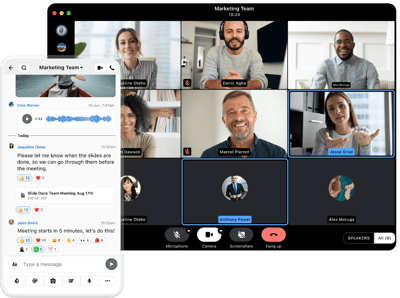
Wire enables teams to communicate securely with external organizations through E2EE messaging, calls, video conferencing, and file sharing. Organizations can bring external partners into controlled conversations using guest and external access, while maintaining governance over how those participants interact with internal teams. This gives incident responders, suppliers, and partner agencies a secure way to exchange information without moving coordination to unmanaged consumer channels.
Wire Bund for classified government communication
Wire Bund, Wire's dedicated government variant, has received VS-NfD approval from Germany's Federal Office for Information Security (BSI), the German government classification equivalent to NATO Confidential. For CNI audiences, it shows that Wire has already built a product to the standard required for highly sensitive government communication, which matters when evaluating whether a communication platform can meet your sector's classification requirements.
Maintaining communications during cyber incidents
When your primary collaboration environment is involved in an incident, response teams still need to communicate while investigation and recovery continue.
Wire can operate as an independent secure communication layer and supports capabilities relevant to this scenario:
- Always-on E2EE protects messaging, calls, and file sharing.
- On-premises and sovereign deployment options provide greater infrastructure control for organizations with strict requirements.
- Federation supports coordination between separately administered organizations.
- ID Shield helps organizations verify trusted devices.
- Operator Shield protects message content from administrators and infrastructure operators.
- Metadata Mask disguises communication traffic patterns and is relevant for field teams and CNI operators working in environments where even the existence of a conversation needs to stay concealed.
- MLS-based post-compromise security replaces encryption keys after a device compromise so future messages stay protected even if past keys were exposed.
More than 1,800 organizations, including government agencies and mission-critical operators, already rely on Wire for exactly this kind of resilient, sovereign communication infrastructure. If your organization operates within critical national infrastructure, book a demo to see how Wire fits into your existing resilience strategy as a secure communication tool.
Frequently Asked Questions