Enterprises share confidential documents every day, from financial reports and legal contracts to government records, customer information, and internal strategy documents. These files frequently move between departments, external partners, contractors, and clients, often through several tools before the work is complete.
A secure document sharing platform lets your team share these confidential files while maintaining security and compliance. In this guide, we'll discuss why secure document sharing is important, its benefits, and compare the leading platforms to help you choose the right one.
To see how Wire combines secure communication with document collaboration in a single platform, get in touch with our team.
Key takeaways
- A secure document sharing platform should offer encryption, identity verification, granular access permissions, and audit controls to protect confidential files during storage, sharing, and collaboration.
- Encryption models vary across platforms, so verify who controls encryption keys, whether providers can decrypt stored content, and the level of protection applied to shared documents.
- Government agencies and regulated enterprises should evaluate data sovereignty, deployment flexibility, compliance requirements, and ease of use when choosing secure document sharing software.
- Wire combines end-to-end encrypted messaging and file sharing through Wire Drive with real-time document collaboration, version history, and group-based access controls, helping you collaborate securely within a sovereign digital workspace.
What is a Secure Document Sharing Platform?
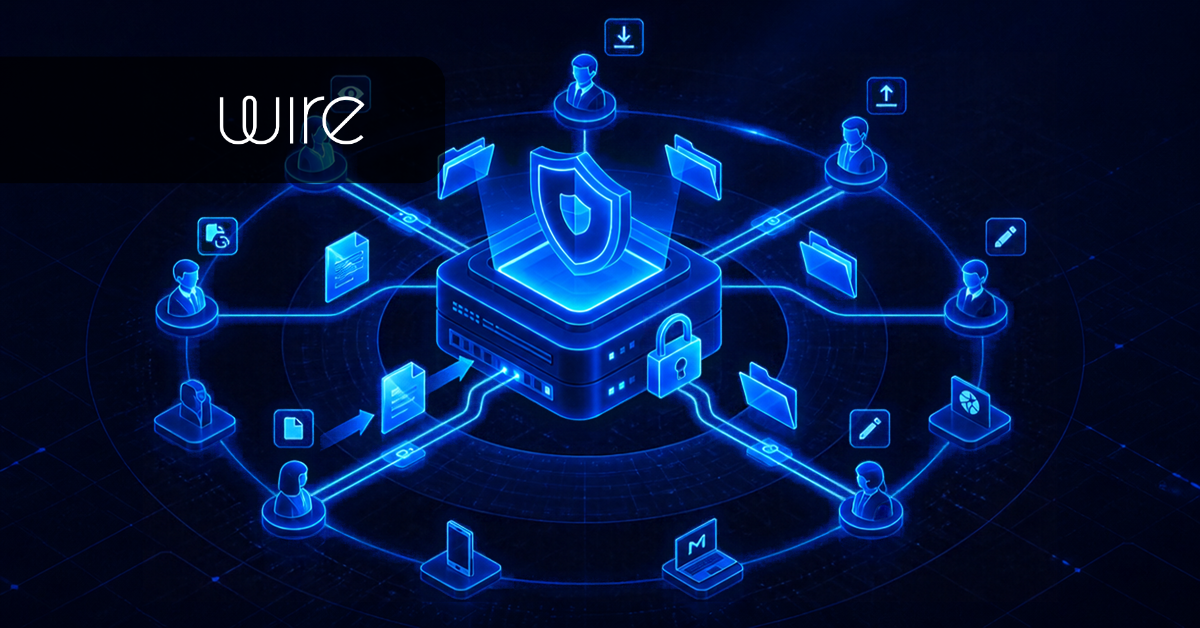
A secure document sharing platform is a specialized cloud or digital service that lets you store, send, and collaborate on sensitive files while protecting them from unauthorized access through encryption, authentication, permissions, and administrative controls. It gives the organization a governed environment where it decides who can open a document, what they can do with it, and for how long.
Benefits of Using Secure File Sharing Platforms for Business
Secure file sharing platforms help enterprises protect sensitive information, collaborate with external partners, and maintain control over document access. Here are the main benefits:
- Protect confidential business information: Wire's State of Secure Collaboration 2026 report found that respondents consider financial data (76%), personal data (75%), and legal documents (63%) sensitive. Secure file sharing platforms help protect these documents through encryption, authentication, and access permissions, reducing the risk of unauthorized access.
- Collaborate securely with external partners: The same report found that 75% of respondents use email to communicate with external partners or clients, while 45% use file-sharing links. Secure document sharing platforms allow organizations to grant specific permissions, authenticate external recipients, set link expiration dates, and revoke access when projects end.
- Improve document collaboration and productivity: Centralized document access, real-time editing, and version history help employees collaborate without creating multiple copies of sensitive files. For example, legal and finance teams can review the same contract, track revisions, and maintain access to the latest approved version.
- Support compliance and data sovereignty: Regulated enterprises and those in critical national infrastructure need control over document access, storage locations, and administrative activity. Some platforms support audit trails, retention policies, and private cloud or on-premises deployment to help meet GDPR, NIS2, and DORA requirements.
For more on regulatory requirements, read Compliance Risk in Digital Collaboration. Or, learn how secure collaboration software protects enterprise communications with end-to-end encryption, zero-trust security, and sovereign deployment options.
Best Secure Document Sharing Platforms
Some of the best enterprise file sharing platforms for businesses include Wire, Box, Dropbox, and ShareFile. Each offers different levels of security and supports different combinations of document encryption, access management, external collaboration, and enterprise administration.
|
Platform
|
Best For
|
Encryption model
|
External collaboration
|
Deployment and governance
|
|
Wire
|
Security-sensitive enterprises, government, and regulated industries
|
Always-on E2EE with MLS for messages, calls, and files shared in conversations; Wire Drive adds centralized encrypted storage
|
Secure conversations, file sharing, Wire Drive collaborative documents, view-only guest access
|
Cloud and sovereign deployment options across the portfolio; open-source transparency
|
|
Box
|
Enterprise cloud content management
|
Encryption in transit and at rest
|
Shared links with expiry, optional passwords, and link scopes
|
Cloud deployment, content governance, audit capabilities
|
|
Dropbox
|
Teams that need simple sync, sharing, and large-file transfer
|
AES-256 at rest and TLS in transit; E2EE available for eligible encrypted team folders.
|
Shared folders, controlled links, file transfers
|
Cloud deployment, audit tools, advanced key-management options
|
|
ShareFile
|
Client-facing document exchange and e-signature
|
AES-256 at rest and TLS in transit
|
Client portals, secure document requests, approval workflows
|
Cloud, with optional customer-managed storage zones; audit trails and retention policies
|
How Wire Supports Secure Document Sharing and Collaboration
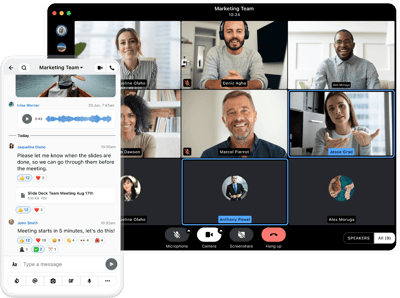
Wire is a sovereign digital workspace built for organizations with stringent privacy, security, and compliance requirements. It brings secure communication and file collaboration into one environment, so your team can communicate, collaborate, and share files in the same secure software. This reduces the number of applications you have to manage and improves the overall productivity of your team due to less tool sprawl.
- Wire Messenger: Provides E2EE messaging, calls, and file sharing by default using MLS, with no opt-in step. Teams can run secure group conversations and communicate with external partners through guest access.
- Wire Drive: Adds document collaboration inside Wire Messenger as an add-on for teams. Each Wire Drive-enabled group gets a Shared Drive where files sent in messages are automatically captured, organized, and searchable. Access depends on group membership, with no default administrator override, so permissions follow the conversation.
We also continuously introduce product updates to improve security, usability, and administrative control. For example, Wire Drive now allows team admins to view real-time storage, giving them better visibility into storage consumption and available capacity.
With Wire Messenger and Wire Drive, organizations can securely exchange confidential files and collaborate on documents within a connected workspace, while choosing deployment options that support their sovereignty requirements.
See how Wire can support your organization's secure document sharing requirements. Get in touch.
Why Email and Consumer File Sharing Put Documents at Risk
Many organizations exchange sensitive documents through email attachments, personal cloud storage, consumer messaging apps, and removable storage devices. These methods can create security and governance challenges and increase cybersecurity risks in digital collaboration.
Email Attachments and Uncontrolled Copies
Email remains a primary tool for 63% of respondents in our survey, showing that modern collaboration stacks still depend heavily on older, less controllable infrastructure.
Email attachments can create additional document copies as files move between recipients. For example, an employee may send a confidential board presentation to six executives, who download it to their devices and forward it to their advisers.
The original sender may have little visibility into where those copies are stored or who can access them afterward. Email encryption can protect message delivery, but it does not automatically provide centralized control over files recipients have already downloaded.
Secure document collaboration reduces unnecessary copies by allowing authorized participants to access a managed document or workspace.
Consumer Tools and Shadow IT
Employees often reach for personal cloud accounts, USB drives, and consumer messaging apps like Telegram when the approved tools feel slow or restrictive. As a result, sensitive information can leave an organization’s secure environment, with no audit trails, retention controls, or ability to revoke access when someone leaves.
Wire Pro Tip
Review where documents travel today before you evaluate any platform. A short survey of finance, legal, HR, and operations teams often shows which consumer tools are already in use, and that list gives you a realistic set of workflows the new platform must support.
For a closer look at this behavior, read why WhatsApp and Signal are not an option for secure business communication.
Provider and Administrator Access to Stored Content
Many cloud platforms encrypt documents at rest, and the provider typically manages the keys. In that architecture, the provider’s systems and authorized administrators can technically access stored content. This can be an issue for:
- R&D teams that share proprietary data, models, and intellectual property
- M&A and strategy teams who exchange confidential documents and early-stage plans
- Finance teams that handle forecasts, earnings, and investor-sensitive information
- Legal teams and leadership managing privileged and high-risk decisions
A CISO evaluating highly confidential document sharing should ask whether provider personnel, administrators, compromised service credentials, or other privileged identities could expose these protected files.
Jurisdiction and Data Residency
The country where a provider is headquartered and the location where it stores data both influence which authorities can request access. For European organizations, the US CLOUD Act is one consideration when evaluating providers subject to US jurisdiction.
Regulated organizations should ask each vendor where documents reside, which entity operates the platform, and which legal regulations apply, and they should involve legal counsel in the answer.
Secure Document Sharing for Regulated Industries
If your company operates in a regulated industry (government agencies, financial institutions, healthcare providers, and legal organizations), you may face stricter file sharing requirements because your documents may contain confidential or regulated information.
- Government and public sector: Government agencies share sensitive operational reports, policy documents, procurement records, and interagency communications. These require verified user identities, restricted permissions, and control over where information is stored. They may also prefer sovereign file sharing solutions and the ability to choose the deployment methods. Check out how Wire provides state-of-the-art secure collaboration software for government use cases.
- Legal and professional services: Law firms and corporate legal teams exchange contracts, litigation materials, due diligence records, and confidential client information with external parties. The best secure document sharing platforms for legal teams provide granular permissions, document version history, encryption, and controlled client access.
- Financial institutions: These share reporting packages, client onboarding documents, due diligence materials, and contract reviews. They also face stricter retention policies. Platforms should provide detailed audit trails, retention controls, and clear information about where data resides and who operates the service.
- Healthcare: Healthcare organizations manage confidential medical and administrative documents that require strict access permissions. Where it applies, the HIPAA Security Rule calls for safeguards such as access controls, audit controls, and transmission security. Teams should confirm how a platform handles these safeguards and whether the vendor will sign the agreements that the regulation requires.
Also read: Learn what HIPAA-compliant texting actually requires, why standard SMS and consumer apps fall short, and how to evaluate a compliant messaging platform.
Best Practices for Sharing Documents Securely
Best practices for secure document sharing include sharing only with those who need it, revoking access when the work is done, and keeping discussions about a document in the same trusted space.
- Classify documents before sharing them: Decide whether a file is public, internal, confidential, or restricted, and let that label determine the sharing method.
- Share with named people or groups before using a link: Grant access to specific individuals or authorized groups instead of using unrestricted public links. Follow the principle of least privilege by allowing recipients to view, edit, or download only the documents necessary for their work.
- Set expiry and passwords on external links: Use password-protected links, expiration dates, and recipient authentication when sharing documents externally. Remove access when contracts expire, projects finish, or employees change roles.
- Review audit logs on a schedule: Look for unusual download volumes, access from unfamiliar locations, and permission changes on sensitive folders.
- Keep the discussion of a document in the same trusted space: Employees often exchange sensitive information while reviewing documents. Encourage teams to discuss confidential files through approved communication channels instead of personal email or unmanaged messaging applications. Platforms such as Wire allow organizations to combine secure conversations with document collaboration, helping teams maintain consistent access and security practices.
- Give staff a sanctioned tool they like using: Involve multiple teams when finalizing a platform and gather honest feedback to reduce shadow IT.
Following these practices becomes easier when your organization uses a secure document sharing platform that combines encryption, access controls, and document collaboration. With a platform like Wire, teams can securely exchange confidential files, manage document access, and collaborate within a trusted environment, reducing the risk of unauthorized sharing and shadow IT.
Frequently Asked Questions